
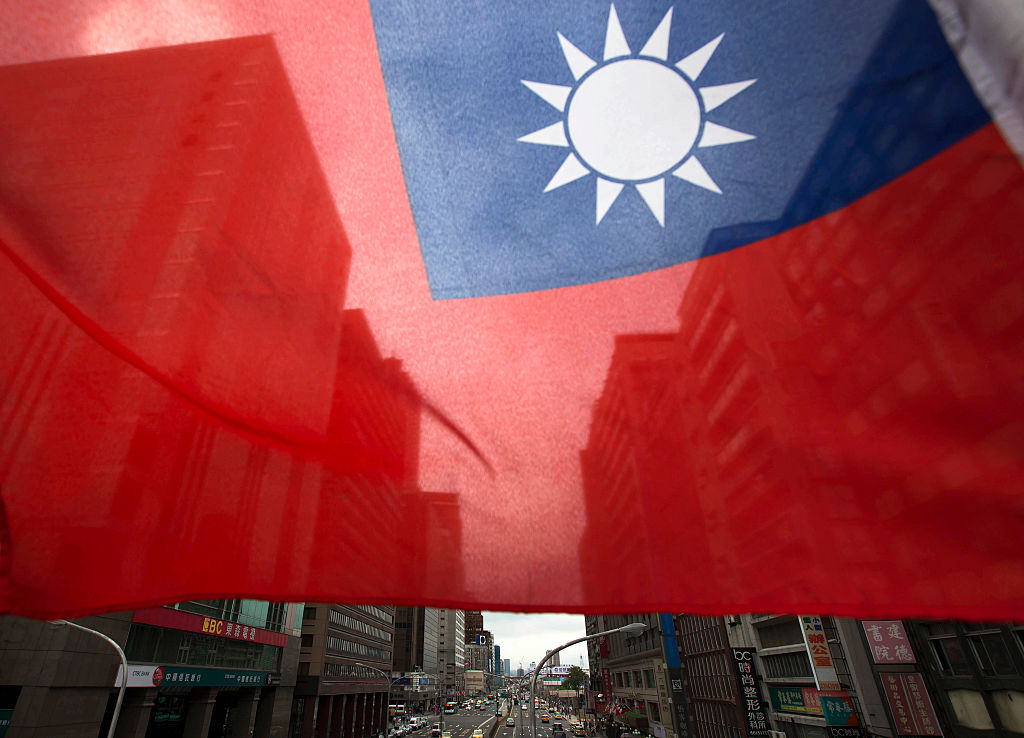
Mandarin Selling to Taiwan – Overview
Selling to Taiwan – Taiwan, also known as Taipei or the Republic of China (ROC), is a highly developed economy that is strategically located in the Asia Pacific region. It is a well-regulated market with strong IP protection. It is a stable economy and is the 21st-largest importer in the world.
Due to geopolitical reasons with China, Taiwan is limited to the number of international organisations it can join. China still claims ownership of the island of Taiwan and is currently politically active to try to achieve control of the country. Due to the sensitive relations between Taiwan and China, most countries do not officially recognize the government of Taiwan. However, they do maintain close unofficial links with the country.
Taiwan has a stable political structure, a strong legal system, and a good system of regulation. It has a population of 23.5 million people, with 70% of the population between the ages of 15 and 64 (source cia.gov).
Taiwan Business Culture
The official languages in Taiwan are Mandarin Chinese and Hokkien. Due to its key economic connections with the United States, English is also spoken by a majority of the population.
Many people in Taiwan use an English first name with a Chinese family name, e.g., Jenny Liu. When you see this, you can address the person in the same manner as is done in the West, with the first name before the surname.
Business negotiations with Taiwanese counterparts can be time-consuming, so patience is essential. The Taiwanese have a reputation as excellent business negotiators, so it is advised to be prepared and conduct proper research on the company, the market, and your competitors.
Punctuality is a respected characteristic in Taiwan. Try to arrive at the meeting location at least 10 minutes before the agreed-upon meeting time.
Bring plenty of business cards. The Taiwanese love business cards!
Business dinners and drinks are often where opportunities for genuine business discussions arise.
**Tip** Always start with a “getting to know you” talk before engaging in a discussion on a business topic.
Setting up in Taiwan
Most companies seeking to enter the Taiwan market typically begin by utilizing a local agent, distributor, and/or representative. These are typically small to medium-sized companies that can leverage their trading connections to generate sales opportunities for your products.
In Taiwan, it is also possible to set up a company office, branch office, representative office, job-site office, or joint venture.
Approval is required from the Taiwanese Ministry of Economic Affairs’ Investment Commission (MOEAC) to establish a company in Taiwan. Once approval has been obtained, it is possible for foreign investors, with some exceptions, to set up:
- An unlimited company
- An unlimited company with limited liability shareholders
- a limited company
- a company limited by shares
Banking and Finance
- The unit of legal tender in Taiwan is the New Taiwan Dollar (NT$).
- Taiwan has a well-established banking network and financial system. Its local banks offer a wide range of services, including loans, trade finance, guarantees, and other financial services.
- Foreign banks are also permitted to operate in Taiwan and offer the same services as local Taiwanese banks.
- Taiwan does not operate any foreign exchange restrictions.
Selling to Taiwan-Tariffs and Non-Tariff Barriers
Tariff
Taiwan’s tariff schedule is based on the two-column tariff Harmonized Commodity Description and Coding System of the Customs Cooperation Council.
The Taiwan Customs Administration, part of the Ministry of Finance, regulates all goods imported into Taiwan. Customs duty is levied on all imported goods. The rate falls into two categories, which are:
- A general tariff rate.
- A special rate is applied to goods imported from territories that offer reciprocal treatment to Taiwan.
Taiwan calculates most of its duties using the GATT Valuation model:
- Approximately the Cost of the Product, plus,
- Insurance and Freight (CIF) value (Incoterms 1990).
Taiwan gives preferences to countries with which it has trade agreements. This may mean that products imported into Taiwan from these countries may have reduced import tariffs. You should research this through your local government trade support office.
Tariffs and duty rates are subject to change without notice. It is worth visiting Taiwan’s Customs Administration to obtain updates on any customs or import taxes applicable to your products.
Non-tariff barriers
Most products can be imported freely into Taiwan, and importers can directly apply to customs for clearance. Taiwan prohibits or restricts the import of the following products:
1. Fake or spurious currencies or securities, or molds for printing counterfeit currency.
2. Articles infringing upon the rights of patents, trademarks, and copyrights.
3. Contraband articles specified by other laws, such as:
- Contraband drugs specified by the Medicine Law;
- Foods and fruits from the epidemic area;
- Mainland China goods are not permitted to import;
- Endangered wildlife and their products unless approved by the Council of Agriculture in advance.
Taiwan’s Customs Administration has a link to the overall list of products.
Product labeling, certification, and packaging
So, Taiwan’s labeling regulations, the Commodity Labelling Act, amended on January 26, 2011, state that all imported goods have Chinese language labels and instructions, which shall be at least as comprehensive as the language-of-origin labels and accompanying instructions. This is governed by Taiwan’s Food & Drug Administration department.
Additionally, for the products which are to be sold in the domestic Taiwan market, the importer in Taiwan is responsible for converting all the labels, instructions, and sales literature from the foreign language into Chinese. The name/title and the address of the foreign manufacturer of the imported product may not be written in the Chinese language.
Therefore, when selling in Taiwan, its labeling laws require the following to be on the label:
- Name of the commodity.
- Name, telephone number, and address of the producer or manufacturer, the place of origin of the commodity, and the name, telephone number, and address of the importer for the imported commodity.
- Contents or composition of the commodity.
- Major components/ingredients or materials.
- Net weight, volume or quantity, or measurements shall be labeled in statutory measuring units, and other measurements may be added when it is deemed necessary.
- Date of manufacture in the Chinese calendar or Gregorian calendar; the expiration date or the term of validity if the commodity has a limited duration of storage; and other particulars as required by the Central Taiwan authorities.
Other Useful Information
**Taiwan uses the metric system**
Outer containers should bear consignee and port marks and should also be numbered (according to the packing list) unless their contents can be readily identified otherwise.
Square recycling logos are required to be on recyclable containers. For plastic containers, triangle recycling logos should be shown.
Most textile goods are now subject to mandatory labeling requirements; for specific details, please contact the relevant importers.
Certification
- Live animals, animal products, plants, and plant products require health certificates issued by an approved authority in the country of origin (two copies).
- Old jute, feather waste, cotton rags, etc., require a fumigation certificate (two copies).
- Old newspapers require a sanitary certificate (two copies).
Packing
Exporters should make sure that any packaging used is capable of protecting the products from extreme weather and climate changes, as well as the rigors of transport and handling.
Methods of quoting and payment
Importers and exporters commonly use an irrevocable letter of credit (L/C) payable at sight to settle international transactions, as it protects both parties. All payment terms should be agreed upon in advance. Ensure that everyone involved understands the agreed terms, and have your client, representative, or contact sign a mutually approved document.
It is best practice for sellers dealing with new customers to use secured payment terms such as 100% payment prior to shipping, letters of credit, sight drafts, or bills of exchange.
Selling to Taiwan – Documentary & Clearance Requirements
Documentation required:
It is essential to provide the correct documentation when selling to Taiwan. The documents required for shipments include:
- A Commercial invoice (four copies). Apart from the standard information, commercial invoices must also include;
- The Taiwan import license number.
- The Total unit price (including carriage and insurance).
- A Bill of lading or airway bill.
- A Packing list (two copies).
- A Certificate of Origin is also required.
- A Health Certificate, issued by an approved authority in the country of origin, is also required for live animals, animal products, plants, and plant products (two copies).
Customs process:
An importer in Taiwan requires a foreign supplier’s pro forma invoice (quotation) to obtain an import permit and establish a letter of credit.
To avoid delays and speed up customs clearance, prepare most documents in Mandarin Chinese.
The commodity description and value shown on the commercial invoices must agree with those on the import license.
Taiwan’s Bureau of Foreign Trade has an online application system.
Business Risks when Selling to Taiwan
So, Companies selling to Taiwan should commit to the highest level of corporate behavior and familiarize themselves with the laws of the country and the penalties pertaining to bribery of foreign officials.
Intellectual Property Protection
Taiwan’s trademark and patent laws are in line with international standards. The Taiwan Intellectual Property Office is responsible for the administration of patent, trademark, and copyright laws. It has cooperation with many other international IP agencies. You can find the fee details on its website.
Dispute resolution
The legal system in Taiwan is primarily based on the civil law system, characterized by firm and clearly defined terms in the law codes and regulations. Hiring a local legal representative is a common practice.
Selling to Taiwan – Taiwan Web Resources
Bureau of Foreign Trade
Food and Drug Administration
Intellectual Property Office
Ministry of Economic Affairs
Ministry of Foreign Affairs
Taiwan External Trade Development Council
Taxation Administration
So Selling to Taiwan – About the Author
So, Aidan Conaty is the founder of TCI China and Goodada.com. Aidan has spent over 15 years assisting companies to trade internationally. He founded Goodada Quality Control Inspections, which conducts Inspections across Taiwan.
Contact Person: Aidan Conaty
Mobile- Messenger (Click to Connect)

Laptop / PC (Click to Connect)

Phone:(Europe/ Rest of the World) +353 1 885 3919 ; (UK) +44.020.3287.2990 ; (North America) +1.518.290.6604
One Trackback
[…] Selling to Taiwan – Overview and Tips […]