
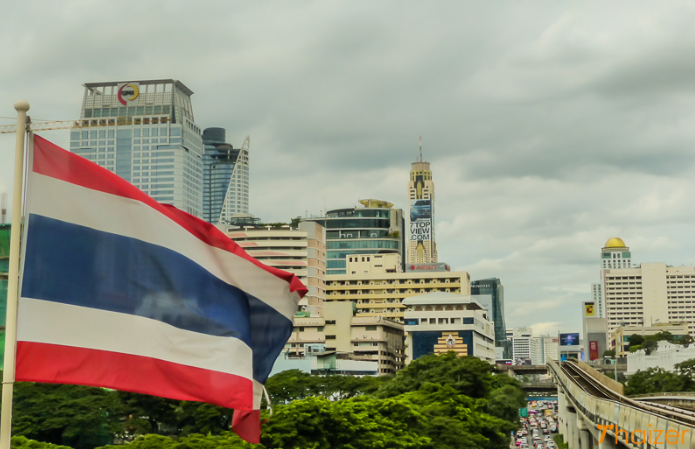
Exporting to Thailand – Overview
Originally published on August 22, 2018. Updated on November 19, 2025.
Exporting to Thailand – Thailand is the second-largest economy in the ASEAN trade bloc. Thailand’s economy is heavily reliant on exports. in 2024, the country’s goods exports reached approximately USD 300.5 billion, marking a growth of about 5.4% from the previous year.
Despite occasional political change and its status as a constitutional monarchy, business operations and export activity in Thailand proceed with relative stability.
Thailand’s population is estimated at around 69.8 million (2023 estimate). The demographic profile is shifting: the country has a high median age and a growing proportion of older citizens, reflecting the challenges of an ageing population.
Economically, Thailand recorded growth of about 2.5% in 2024, aided by solid ehttps://www.cia.gov/the-world-factbook/countries/thailand/xport performance and government stimulus. From a strategic location perspective, Thailand benefits from good infrastructure, a growing affluent middle class, and the ability to reach a large part of the world within a few hours’ flight — factors that make it an attractive proposition for international business.
Thailand Business Culture
English is commonly used in larger Thai companies, especially those with international links. However, among small and medium-sized enterprises, English proficiency can be limited, so it’s often helpful to keep communication simple and confirm key details in writing.
As in many Asian markets, personal relationships matter greatly in Thailand. Before discussing contracts or pricing, Thai partners will usually take time to get to know you and assess whether a long-term relationship is possible. Patience and consistency go a long way.
When doing business in Thailand, keep the following cultural points in mind:
-
Avoid pointing directly at someone with your finger or snapping your fingers to get attention. Both are seen as impolite.
-
When hosting VIPs or government officials at a formal event, it is customary to present a small gift.
-
Have the reverse side of your business card translated into Thai. It shows respect and helps communication.
-
Never point your foot at a person or an object, and avoid resting your feet on furniture.
-
Do not sit with your feet extended toward a Buddha image — this is considered highly disrespectful.
-
Respect for age, seniority, and position is deeply rooted in Thai society. Decisions often flow from senior figures, so address them appropriately.
-
Use “Khun” (the Thai equivalent of Mr./Mrs./Ms..) followed by the person’s first name when addressing your Thai counterparts.
Setting up in Thailand
There are a few practical ways to break into the Thai market. Some firms start by appointing a local agent or distributor. Others prefer to ship directly from abroad, partner with a franchise operator, or set up a joint venture. Larger companies sometimes go a step further and open a representative office or a small regional base to manage the market.
Thai buyers place a lot of value on good technical support. Price matters, of course, but people want to know that someone is available locally when something goes wrong. Having even a small presence on the ground often gives foreign companies far more credibility.
Ownership rules can affect how you set up. In many sectors, foreign firms can only hold up to 49% of a company, with the rest staying in Thai hands. That said, the rules are not the same across the board. Some industries can apply for higher foreign ownership, especially if the project qualifies for incentives from the Thai Board of Investment.
Once you’ve decided how you plan to enter the market, take your time and get proper legal and commercial advice. Thailand is a friendly place to do business, but the paperwork and local regulations can be tricky if you’re new to them.
Banking and Finance
Thailand’s currency is the Thai Baht (฿ or THB), which is widely available and easy to exchange across the country.
The country has a well-established banking system. At present, there are 14 Thai commercial banks operating nationwide, along with 11 branches of foreign banks that handle international business and trade-related services.
Thailand does have foreign exchange controls, but most travellers and business visitors rarely run into issues. Non-residents can bring in as much foreign currency as they wish, and they can take the same amount back out when they leave. The rules are stricter for Thai Baht: visitors cannot take more than 50,000 Baht out of the country, unless they are travelling to one of Thailand’s neighbouring countries — Myanmar, Laos, Cambodia, Malaysia, or Vietnam — where the limit increases to 500,000 Baht. There are no limits on how much Thai Baht can be brought into Thailand.
Thailand – Tariffs and Non-Tariff Barriers
Tariff
Thailand is part of the ASEAN community, so it follows the regional tariff-reduction arrangements that apply to trade between ASEAN member countries.
Most goods entering Thailand face two main charges: import duty and VAT. Importers calculate import duty by applying the duty rate to the CIF value of the goods. They then add that duty amount to the CIF value and use the total to calculate VAT. If excise tax applies, they must add it before calculating VAT.
Goods that are brought into Thailand for re-export are usually exempt from both duty and VAT, provided the correct procedures are followed.
Up-to-date details on excise tax can be found on the Ministry of Finance’s Excise Department website, while customs duties and trade statistics are available through the Thai Customs Department.
Non-tariff barriers
Most goods can move freely into Thailand once the correct import duties are paid. However, a number of items are either restricted or completely banned, and it’s important to be aware of these before shipping.
Prohibited goods are items that cannot be imported into or exported from Thailand under any circumstances. These include:
- Obscene or indecent publications or images
- Pornographic material
- Products displaying the Thai national flag in an improper way
- Narcotics such as heroin, cocaine, opium, and similar substances
- Counterfeit banknotes, bonds, or coins
- Fake government seals or royal seals
- Goods that infringe intellectual property rights, such as pirated CDs, DVDs, or software
- Counterfeit branded products
Restricted goods can be imported, but only with the correct licence or approval from the relevant Thai authority. Some examples include:
- Medicines, food products, and supplements — require approval from the Food and Drug Administration under the Ministry of Public Health
- Antiques and works of art — need permission from the Fine Arts Department, even if the items are unregistered
- Weapons, ammunition, explosives, fireworks, and both real and replica firearms — require permits from the Ministry of Interior; some electrical weapons must also be declared
- Cosmetics covered under the Cosmetic Act — importers must provide details of their business location, storage location, product type, and the main ingredients
- Wildlife, plants, fish, and related species — require approval from the Department of National Parks, the Department of Agriculture, or the Department of Fisheries, depending on the item
If you need guidance on whether a particular product can be imported into Thailand, you should consult the relevant Thai government agency or a specialist customs advisor before shipping. Here is a link to the Thai Customs website.
Product labelling, certification and packaging
Thailand Food Labelling
Thailand has detailed labelling rules for many food categories, including dairy products, baby food, canned goods, vinegar, beverages, edible oils and fats, and products containing MSG. Imported food must carry a label in Thai, and it must include key information such as:
- Ingredients and any additives used
- Manufacturing date and expiry/best-before date
- Any health or nutrition claims
- The name and address of the importer
- The name and address of the manufacturer, including the country of origin
- The product name and brand
- Net weight or net volume
- The product’s registration or food serial number
- Allergen information where required
Alcoholic beverages must show the alcohol content and must carry a Thai-language health warning using the exact wording and layout prescribed by the Ministry of Public Health. The warning may appear directly on the label or on an attached sticker.
Cosmetics also have their own labelling requirements, and importers typically handle the registration and compliance work with the Thai FDA.
Thailand Certification Requirements
Thailand requires a range of certificates and licences for importing industrial goods, agricultural products, pharmaceuticals, textiles, petroleum products, and other regulated items. Requirements vary by product, but some common examples include:
- Frozen fruit and vegetables: may need a certificate of condition or other product-specific documentation.
- Seeds, plants, and live animals: require phytosanitary certificates issued by the authorised agency in the exporting country.
- Meat and meat products: must be accompanied by a veterinary health certificate confirming that:
- The exporting country meets Thailand’s disease-control requirements
- The animals were processed in an approved facility under proper veterinary supervision
- The products are fit for human consumption and comply with Thailand’s rules on additives and preservatives
- Shelf life and storage conditions meet Thailand’s specific regulations for that product
For medical and pharmaceutical items, Thai authorities may ask for a Certificate of Free Sale or similar documentation before approving the shipment.
Packaging
Thailand’s climate can be challenging—hot, humid, and prone to heavy rainfall. Exporters should ensure their packaging is strong enough to handle temperature changes, moisture and normal transport stress. Well-sealed, durable packaging is essential, especially for food, electronics, and perishable items.
Quality Control Inspections and Supplier Auditing Services
If you’re sourcing from Thailand, it’s often hard to know what’s really happening inside the factory. That’s where Goodada steps in. We have inspectors across the country who can go on-site, review the goods during production, check quantities, and confirm that the work matches what you agreed with the supplier. It’s a straightforward, practical service that gives buyers a clear picture before the supplier ships anything out. We work with all sorts of products — textiles, furniture, electronics, machinery, fruit, and many others — and we know the common trouble spots that can catch out overseas buyers.
We also carry out factory visits and supplier background checks for companies that want a clearer picture of who they’re dealing with. These on-site reviews look at how the factory operates, the equipment they use, and whether they follow the basic requirements you would expect when supplying international customers. For many buyers, having an independent set of eyes on the ground in Thailand cuts down on risk, improves communication with the supplier, and helps avoid the kind of mistakes that become expensive once the goods arrive. To learn more, please visit our Thailand Inspections page.
Methods of Quoting and Payment in Thailand
Quotations for Thailand are commonly offered using Incoterms 2020, with CIF, FOB, or CFR being the most frequently used terms.
For new business relationships, Thai importers often prefer an irrevocable letter of credit (L/C) payable at sight, as it provides security for both sides. Whatever payment method is chosen, it should be agreed upfront and confirmed in writing so there is no ambiguity.
For new or higher-risk customers, exporters usually protect themselves by using secure payment options such as:
- 100% payment before shipment
- Irrevocable letters of credit
- Sight drafts
- Bills of exchange
Clear communication and proper documentation help avoid delays and misunderstandings later.
Documentary & Clearance Requirements
Documentation required:
Thai Customs requires an Import Entry Form or Export Entry Form for every shipment entering or leaving the country. These forms are normally lodged electronically through Thailand’s e-Customs system, usually by the importer’s appointed customs broker or freight forwarder.
Typical supporting documents include:
- Import Declaration / Export Declaration
- Bill of Lading (B/L) or Air Waybill
- Commercial Invoice
- Packing List
- Import Licence, if the product falls under a controlled category
- Certificate of Origin, where duty preferences or regulatory requirements apply
- Any additional documents that Customs or another Thai authority may request (for example, product specifications, catalogues, ingredient lists or test reports)
Certain goods require pre-approval or licensing from specific Thai agencies before they can be imported. These include food and beverages, pharmaceuticals, medical devices, cosmetics, hazardous chemicals, live animals, and many agricultural products.
Customs Process
Using a freight forwarder or customs broker is strongly recommended when exporting to Thailand, as they are familiar with the electronic declaration system and specific documentary requirements.
Once the goods arrive at the port or airport, the importer must file a Goods Declaration along with the supporting documents. Shipments only clear customs once:
- The goods have physically arrived in Thailand
- Customs has reviewed the declaration and authorised release
- All duties, taxes and charges have been paid or a financial guarantee has been lodged
Importers are responsible for arranging inspections, coordinating with Customs, and ensuring that clearance is completed correctly.
Exporters can access up-to-date rules and procedures on the Thai Customs Department website.
Thailand Business Risks
Companies entering the Thai market should maintain strict compliance standards. Thailand has clear laws covering bribery and the improper influence of public officials. Businesses should understand the relevant regulations and make sure their internal policies match local legal requirements.
Thailand Intellectual Property Protection
Thailand follows international IP rules through its membership of the WTO and the TRIPS Agreement, and it has signed several IP treaties administered by WIPO.
IP Tips for Thailand
- First-to-file: Thailand grants IP rights to whoever files first. Register your trademarks, patents and designs early.
- Local registration is essential: Rights registered abroad are not automatically protected in Thailand.
- ASPEC cooperation: Thailand participates in the ASEAN Patent Examination Co-operation (ASPEC) programme. This allows applicants to use prior search and examination results from other ASEAN IP offices to speed up patent processing in Thailand. The programme is free and conducted in English.
Thailand Business Dispute Resolution
Thailand has a civil law system, based mainly on written legislation rather than binding court precedent. The Constitution sits at the top of the legal hierarchy, followed by Acts, Codes, and ministerial regulations.
Although judicial decisions do not carry formal binding power, courts widely rely on Supreme Court rulings and treat them as persuasive authority.
For companies unfamiliar with Thai law, the safest approach is to work with a local legal representative who can advise on contracts, compliance, and any potential disputes.
Thailand Web Resources
Thai Customs
Ministry of Commerce
Ministry of Finance
Ministry of Industry
Thai Revenue Department
Thailand Board of Investment
Department of Intellectual Property
Stock Exchange Thailand
The Securities and Exchange Commission
Royal Thai Police
Department of Business Development (DBD), Ministry of Commerce, Thailand
About the Author
Aidan Conaty is the founder of Goodada Inspections & TCI China. Aidan is a qualified Management Accountant and has a background in Supply Chain Consultancy. Goodada Inspections has been conducting inspections in Thailand since 2008.
FAQ – Doing Business and Exporting to Thailand
1. What documents are required to import goods into Thailand?
Importers normally need an Import Entry Form, a commercial invoice, a packing list, and a bill of lading or air waybill. Depending on the product, Thai Customs may also ask for a certificate of origin, an import licence, or additional technical documents.
2. Do all products entering Thailand need special licences?
No. Many goods can enter freely once duties and taxes are paid, but regulated items—such as food products, cosmetics, medical devices, pharmaceuticals, chemicals, animals and some agricultural goods—require approval from the relevant Thai authority before import.
3. Are there strict labelling rules for food sold in Thailand?
Yes. Most pre-packaged foods must carry Thai-language labels showing ingredients, additives, expiry dates, importer details and other mandatory information set by the Thai FDA. Certain products, such as dairy, baby food and beverages, have extra requirements.
4. How are alcoholic beverages labelled in Thailand?
Labels must show the percentage of alcohol and include a Thai-language health warning using wording and layout prescribed by the Ministry of Public Health.
5. Do foreign companies face ownership restrictions in Thailand?
In many sectors, foreign ownership is capped at 49%. Some industries can obtain approval for majority foreign ownership through the Thai Board of Investment (BOI), depending on the nature of the project.
6. What payment terms are most common when buying from Thailand?
CIF, FOB and CFR under Incoterms 2020 are the most widely used. New buyers often use secure methods like letters of credit or advance payment until trust is established.
7. What is Thailand’s approach to intellectual property protection?
Thailand operates a first-to-file system for patents and trademarks. Registering IP locally is essential. Thailand also participates in the ASPEC programme, which helps speed up patent examination in ASEAN countries.
8. Are inspections recommended when sourcing from Thai suppliers?
Yes. Independent inspections help confirm product quality, verify quantities and ensure the supplier is meeting agreed standards. Many buyers use on-site checks before production, during production or prior to shipment.
9. What are common non-tariff restrictions in Thailand?
Thailand restricts or prohibits items such as obscene materials, counterfeit goods, weapons, certain chemicals, wildlife, pharmaceuticals and cultural heritage items. Some categories require permits from specific government agencies.
10. How can Goodada Inspections help companies working with Thai suppliers?
Goodada provides on-site inspections, factory audits and supplier verification services across Thailand. These checks help buyers confirm product quality, understand factory capabilities and reduce the risk of errors or disputes.