
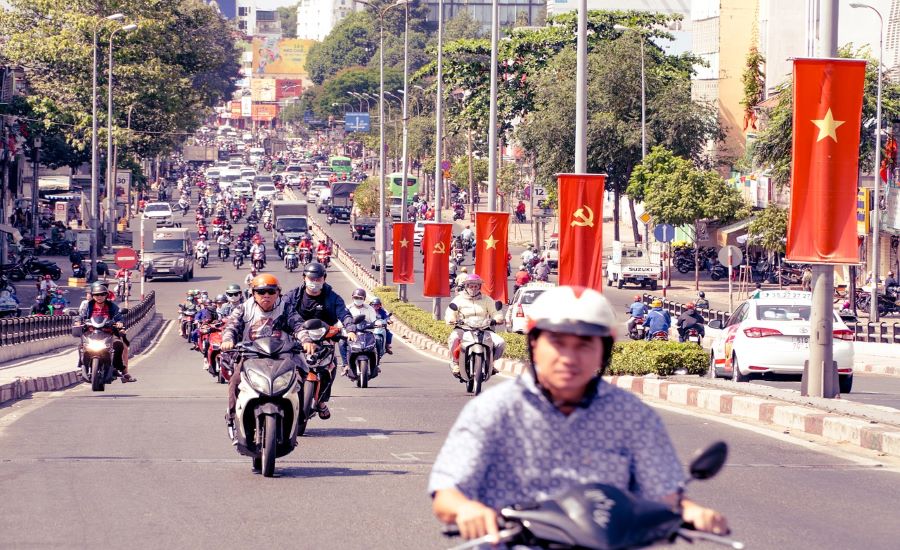
Trading with Vietnam – Selling to and Buying from Vietnam
This article was updated in May 2026 to reflect current sourcing trends, international trade agreements, tariff developments, and Vietnam’s growing role in global trade.
Vietnam has become one of the most important trading economies in Asia. Over the past decade, the country has developed into a major manufacturing and export hub supplying products to Europe, North America, Australia, and markets worldwide.
At the same time, Vietnam’s growing middle class, expanding industrial base, and strong economic growth have created opportunities for companies selling products and services into the Vietnamese market.
Vietnam’s economy grew by 7.09% in 2024, reaching approximately US$476.3 billion. Exports rose by 14.3% to around US$405.53 billion, supported by electronics, smartphones, apparel, agriculture, and wider manufacturing growth.
For international businesses, Vietnam is important for two reasons:
- Buying products from Vietnam as part of global sourcing and supply chain diversification
- Selling products into Vietnam as its domestic economy and industrial sectors continue to expand
As companies continue to reduce overdependence on China-based manufacturing, Vietnam is increasingly viewed as a long-term strategic trade partner.
Vietnam’s Growing Role in Global Trade
Vietnam is now one of Asia’s most trade-oriented economies. The country has developed a wide network of international trade agreements, helping improve market access and reduce tariffs across a range of product sectors.
Some of Vietnam’s most important trade agreements include:
- EU–Vietnam Free Trade Agreement (EVFTA)
- UK–Vietnam Free Trade Agreement (UKVFTA)
- Comprehensive and Progressive Agreement for Trans-Pacific Partnership (CPTPP)
The EVFTA entered into force on 1 August 2020 and has strengthened Vietnam’s trade relationship with the European Union by reducing tariffs on many industrial and consumer product categories.
The UK–Vietnam Free Trade Agreement helps maintain preferential trade access between the UK and Vietnam following Brexit.
Vietnam’s participation in CPTPP also strengthens trade links with countries including Australia, Japan, Canada, Singapore, Mexico, and New Zealand.
These agreements make Vietnam attractive for international buyers, exporters, and investors. However, companies still need to understand rules of origin, documentation requirements, and product compliance obligations before relying on preferential tariff treatment.
Vietnam Business Culture
Business relationships remain extremely important in Vietnam. Trust, consistency, and long-term relationship-building often influence business decisions as much as pricing or technical capability.
Face-to-face meetings are highly valued, especially during the early stages of a commercial relationship. Vietnamese business culture is generally respectful, relationship-oriented, and less confrontational than some Western business environments.
Decision-making can sometimes take longer than expected, particularly within family-owned businesses or larger manufacturing groups where approvals may involve several levels of management.
Many Vietnamese companies now have significant experience working with international customers. However, communication standards, production systems, and management capability can still vary significantly between suppliers and organisations.
Whether selling into Vietnam or buying products from Vietnam, companies should ensure that specifications, prices, payment terms, packaging requirements, delivery dates, and quality expectations are documented clearly.
Selling Products into Vietnam
Vietnam’s domestic market has expanded significantly over the past decade, supported by rising incomes, urbanisation, industrial growth, and increasing consumer demand.
Opportunities for exporters into Vietnam include:
- Industrial machinery and equipment
- Construction materials
- Food and beverage products
- Agricultural technology
- Medical products and equipment
- Industrial raw materials
- Consumer and retail products
Foreign companies commonly enter the Vietnamese market through distributors, agents, local importers, joint ventures, representative offices, or direct exports.
For many companies, working with a trusted local partner is a practical first step. Local distributors can help with regulatory requirements, customer relationships, local language communication, and market access.
Companies selling into Vietnam should review import regulations, certification requirements, customs procedures, and local product standards before entering the market.
Buying Products from Vietnam
Vietnam has become one of the world’s fastest-growing sourcing markets, particularly for labour-intensive manufacturing industries.
Key export sectors include:
- Furniture and wooden products
- Footwear
- Garments and textiles
- Electronics and components
- Consumer products
- Agricultural products
Many international brands have expanded manufacturing operations in Vietnam due to competitive labour costs, improving infrastructure, trade agreement advantages, and wider supply chain diversification strategies.
Vietnam is increasingly viewed as a strategic long-term sourcing market rather than simply a lower-cost alternative to China.
However, buyers should not assume that all suppliers operate at the same level. Factory capability, communication, quality systems, and export experience can vary considerably across sectors and regions.
Tariffs and Trade Considerations
Vietnam’s trade agreements are one of the country’s strongest commercial advantages.
The EVFTA, UKVFTA, and CPTPP provide tariff reductions across many product categories, helping Vietnamese exports remain competitive in Europe, the United Kingdom, and Asia-Pacific markets.
At the same time, wider tariff tensions involving China and the United States have encouraged many international companies to expand sourcing operations in Vietnam as part of broader supply chain diversification strategies.
Vietnam has also faced tariff pressure from the United States, which remains one of its largest export markets. This means buyers and exporters should continue to monitor trade policy developments, especially for products exposed to anti-dumping, origin, or transshipment concerns.
Important trade considerations include:
- Rules of origin requirements
- Product safety regulations
- Labelling standards
- Import and export documentation
- Correct product classification
- Proof of manufacturing origin
Further information can be obtained from the website of Vietnam Customs.
Supplier Risk and Product Quality Considerations
While Vietnam offers major sourcing opportunities, supplier capability and production standards can vary considerably between factories.
Common sourcing risks include:
- Inconsistent product quality
- Incorrect specifications
- Packaging problems
- Shipment delays
- Unapproved subcontracting
- Incorrect labelling or documentation
As Vietnam’s export manufacturing sector continues growing rapidly, many factories are operating at high capacity. This can place pressure on production timelines, quality control systems, and shipment schedules.
For this reason, many buyers apply additional supplier oversight measures before shipment, particularly when working with new suppliers, new products, or larger production orders.
This may include:
- Pre-Shipment Inspections
- Factory Audits
- Supplier Verification Checks
- Container Loading Inspections
For buyers sourcing furniture, apparel, footwear, electronics, or consumer products, independent Vietnam Inspection Services are commonly used to help confirm that products meet agreed specifications before shipment.
These checks are increasingly viewed as part of normal supply chain risk management rather than simply a quality control exercise.
Additionall Vietnam has IP protection laws, but enforcement is not reliable. You’ll need to take measures to protect your IP before exporting. For further help and information, contact the National Office of Intellectual Property of Vietnam (NoIP)
Banking and Finance
The official currency of Vietnam is the Vietnamese Dong (VND).
However, international trade transactions are commonly conducted in US dollars, particularly for export manufacturing.
Bank transfers, letters of credit, and standard international payment methods are widely used when trading with Vietnam.
When working with new customers or suppliers, companies should apply normal commercial safeguards and ensure payment terms are agreed clearly before production or shipment begins.
For buyers sourcing from Vietnam, staged payments are common, often involving a deposit before production and balance payment before shipment. The exact structure should depend on the supplier relationship, product type, order value, and risk level.
Customs, Documentation and Compliance
Export and import documentation requirements depend on the product category, shipment route, and destination market.
Typical trade documentation includes:
- Commercial invoice
- Packing list
- Bill of lading or airway bill
- Certificate of origin
- Product-specific certificates where required
- Inspection or test reports where requested by the buyer or importer
Where preferential tariff treatment is claimed under agreements such as EVFTA, UKVFTA, or CPTPP, exporters must ensure rules of origin requirements are properly met.
Buyers should also check that product labelling, packaging, user instructions, and compliance documentation match the rules of the destination country before goods are shipped.
Conclusion
Vietnam has become one of the most important trading and sourcing markets in global commerce.
Strong export growth, extensive free trade agreements, competitive manufacturing costs, and supply chain diversification are continuing to drive international interest in the country.
At the same time, Vietnam’s expanding domestic economy is creating opportunities for companies selling products and services into the Vietnamese market.
Whether buying products from Vietnam or selling into Vietnam, long-term success depends on understanding the local business environment, building strong relationships, and managing trade, supplier, and compliance risks carefully.
Companies that prepare properly, document expectations clearly, and take a structured approach to supplier and customer relationships are more likely to build successful long-term trade with Vietnam.
Selling to Vietnam – About the Author
Aidan Conaty is the founder of TCI China and Goodada.com. Goodada provides third-party Vietnam Quality Control Inspections.
You can contact Aidan by email at aidan@goodada.com or by phone at
- (Europe/ Rest of the World) +353 1 885 3919
- (UK) +44.020.3287.2990
- (North America) +1.518.290.6604
Trading with Vietnam – Useful Links
- Vietnam Customs
- Vietnam Trade Promotion Agency
- National Business Registration Portal
- Vietnam National E-Procurement System
- Ministry of Foreign Affairs of Viet Nam
- Commission for the Standards, Metrology and Quality of Viet Nam
- Vietnam Chamber of Commerce and Industry – VCCI News
- Vietnam E-Commerce and Digital Economy Agency
- Vietnam E-Commerce Association
- Vietnam Economic Times / VnEconomy
- Vietnam Investment Review
- Viet Nam News
- National Credit Information Centre of Vietnam
Frequently Asked Questions
Why are companies buying products from Vietnam?
Vietnam offers competitive manufacturing costs, strong export growth, improving infrastructure, and extensive international trade agreements.
What products are commonly sourced from Vietnam?
Furniture, footwear, apparel, electronics, agricultural products, and consumer goods are among Vietnam’s major export sectors.
Can foreign companies sell products into Vietnam?
Yes. Vietnam imports a wide range of industrial, commercial, and consumer products from international suppliers.
Does Vietnam have trade agreements with Europe and the UK?
Yes. Vietnam has major trade agreements including EVFTA with the European Union and UKVFTA with the United Kingdom.
Is Vietnam part of CPTPP?
Yes. Vietnam is a member of CPTPP, which includes countries such as Australia, Japan, Canada, Singapore, Mexico, and New Zealand.
Do buyers use Vietnam inspection services?
Many buyers use Vietnam inspection services to help verify supplier capability, product quality, packaging, and shipment readiness before goods are dispatched.