
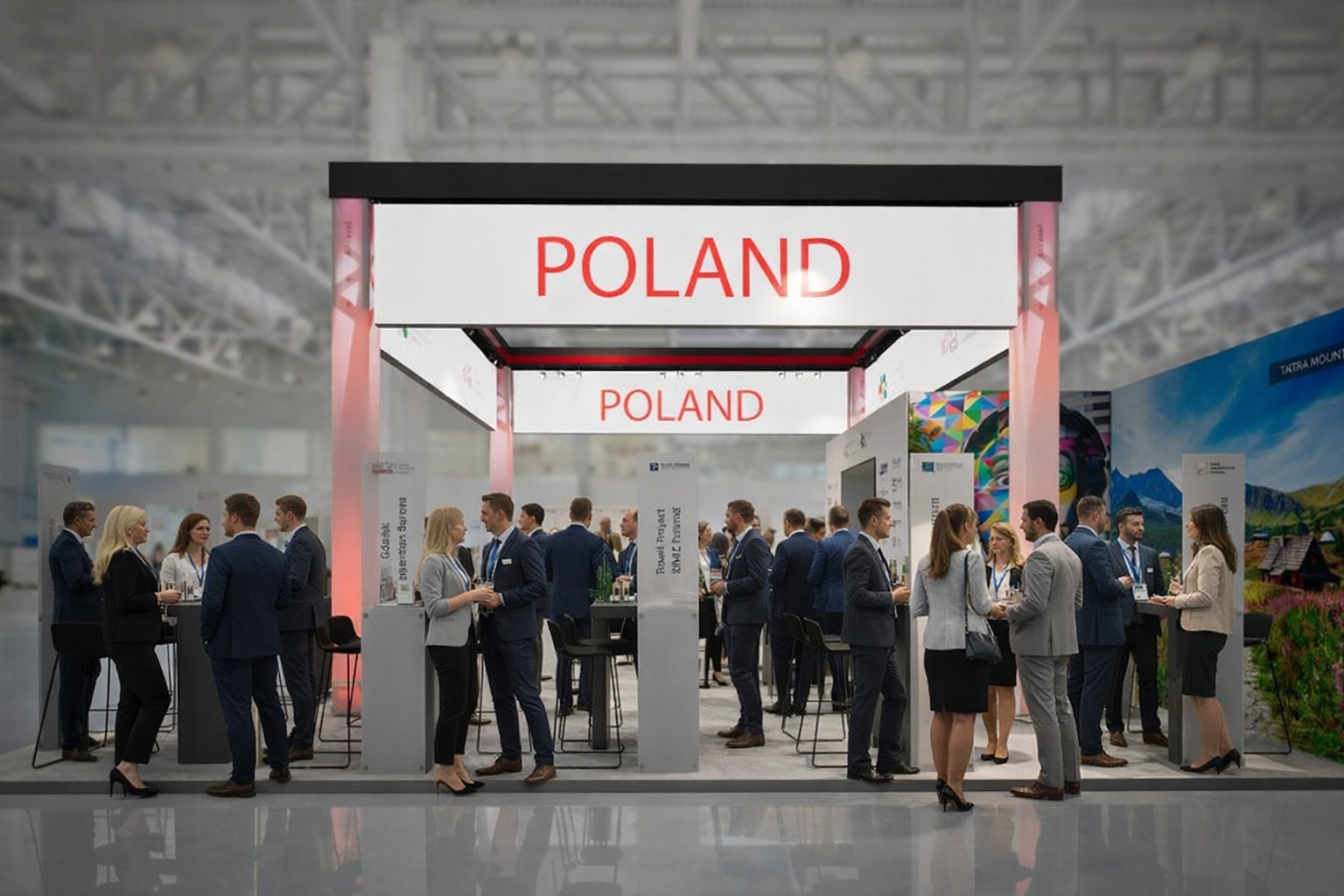
Trading with Poland – Poland is one of the fastest-growing economies in the European Union and a key manufacturing and logistics hub in Central Europe. Since joining the EU in 2004, Poland has become an important supplier to Western Europe across sectors such as furniture, automotive components, machinery, packaging, electronics, and food products.
Poland’s central location, strong road and rail connections, and access to Baltic Sea ports make it attractive for firms importing into, exporting from, or distributing across the European market. As an EU member state, Poland follows EU trade agreements and regulatory frameworks, which simplifies market access for many products.
Trading with Poland – Polish Business Culture
Polish is the official language of Poland. English is commonly used in international business; it is good practice to confirm language capabilities in advance, particularly for technical, legal, or contract negotiations.
Business meetings in Poland should be scheduled in advance and are typically structured and professional. Punctuality, preparation, and clear documentation are valued. In initial meetings and correspondence, formal titles and surnames are often used. As trust develops, communication may become more informal.
Dress code is generally conservative and professional. Dark suits are common for business meetings, and businesswomen typically wear professional suits or modest business attire.
Setting up in Poland
Firms seeking to enter the Polish market have several options, depending on their sector, budget, and strategy. A number of companies start by using local commercial partners and move toward a direct presence once volumes justify it.
- Sales agent or distributor: Verify that agreements comply with EU laws and commercial agent regulations.
- Representative office or local subsidiary: Useful where local support, warehousing, or service is required.
- Joint venture or strategic alliance: Consider EU competition rules and clear contractual protections.
- Franchising: Established across retail and consumer services, particularly in major cities.
- eCommerce: Rapidly growing, supported by strong domestic logistics and modern payment systems.
Sourcing from Poland
Poland’s exported commodities commonly include:
- Furniture and wood products
- Automotive parts and components
- Machinery and mechanical equipment
- Electrical equipment and electronics
- Plastics and packaging materials
- Food and agricultural products
When sourcing from Poland, it is recommended that importers conduct Quality Control Inspections and Supplier Verifications at the supplier’s facility. This helps confirm production capability, quality consistency, packaging standards, labeling accuracy, and shipment readiness before goods leave the factory or warehouse.
Goodada provides Poland Supplier Verification & Quality Control Inspection Services across Poland. If you are buying furniture or fresh produce, you can also request sector-specific inspection checks tailored to your product standards and buyer requirements.
Learn more about Goodada’s Poland Quality Control Inspection services
Furniture Manufacturing in Poland
Trading with Poland – Poland is one of Europe’s largest furniture manufacturers and exporters, supplying major retailers, wholesalers, and brands across the EU, UK, and North America. Polish furniture is particularly well known for wooden furniture, upholstered seating, flat-pack furniture, and commercial furniture for hospitality and offices.
The country benefits from strong access to raw timber, skilled craftsmanship, and modern production facilities. However, as with any large manufacturing base, quality standards can vary significantly between factories, particularly when production volumes increase or when subcontractors are used.
When sourcing furniture from Poland, buyers should conduct independent Furniture Quality Control Inspections to verify:
-
Workmanship and finishing
-
Material specifications and timber quality
-
Dimensions and tolerances
-
Upholstery, stitching, and foam density
-
Packaging strength and export readiness
Goodada Poland Furniture QC Inspections provides dedicated Furniture QC services across Poland, including factory audits, in-line inspections, and pre-shipment inspections.
For firms buying furniture from Poland, these inspections help ensure products meet agreed specifications before goods leave the factory.
Poland Fruit Trade
Poland is one of Europe’s leading producers and traders of fruit, particularly apples, berries, and stone fruits. The country is among the largest apple producers globally, supplying fresh fruit to European markets, processing facilities, and export destinations.
Key Polish fruit exports include:
-
Apples
-
Blueberries and raspberries
-
Strawberries
-
Cherries
-
Blackcurrants
Goodada Poland Fruit Quality Control Inspections supports fruit importers, exporters, traders, and insurers by providing independent inspections at orchards, packing houses, cold stores, and loading points.
Typical Poland Fruit QC inspections include:
-
Visual quality and condition checks
-
Size, colour, and maturity assessment
-
Packaging and labeling verification
-
Cold chain and storage condition checks
-
Quantity verification and loading supervision
Using Goodada Poland QC Inspections for Fruit helps reduce disputes, claims, and rejected shipments by confirming product condition before dispatch or upon arrival.
Banking and Finance
Poland’s legal tender is the Polish Złoty (PLN). While Poland is an EU member, it has not adopted the Euro.
Poland has a modern banking and payments infrastructure and is widely regarded as strong in digital banking and electronic payments. For international transactions, agree on payment terms clearly in advance and ensure all parties sign a mutually agreed document.
Trading with Poland – Tariffs and Non-Tariff Barriers
Tariff
European Union import agreements and rules apply to products imported into Poland. Tariffs and duty rates may change and can be revised without notice. Importers should verify duty rates through official EU or Polish customs resources prior to shipment.
Non-tariff barriers
Poland (through EU rules and national enforcement) imposes restrictions on the sale or use of certain products. These can include:
- Agricultural and food products
- Chemical products
- Pharmaceutical products
- Dual-use goods
- Cultural goods
- Weapons and explosives
- Fauna and flora / protected goods
Product Labeling, Certification, and Packaging
Product labels in Poland are governed by European and Polish regulations. Labels generally must be in Polish. Food labeling must comply with EU food information legislation. For organic food imported from non-EU countries (third countries), EU rules require the same standards as those within the EU.
Manufacturers must apply the CE mark to certain products sold within the European Economic Area (EEA). Depending on the product category, regulators may also require additional marks or symbols relating to safety, recycling, energy efficiency, or disposal.
Importers in Poland should approve packaging in advance, as local market preferences often apply. Companies must mark goods in line with EU requirements and ensure packaging complies with all applicable recycling and environmental rules.
Methods of Quoting and Payment
Cash sales are common for smaller transactions, but many Polish companies request credit terms for larger orders. Agree payment terms in advance (e.g., 30, 60, or 90 days) and ensure all parties understand the payment terms and that they are documented and signed.
Companies sometimes use letters of credit for specific transactions, but many avoid them due to cost and administrative burden. When buyers request credit terms, use trade insurance and buyer verification to manage risk.
Trading with Poland – Documentary & Clearance Requirements
Documentation required
- Customs declarations (commonly via the Single Administrative Document (SAD) where applicable)
- EORI number for non-EU companies trading with Poland
- Commercial invoice and packing list
- Transport documents (e.g., CMR, bill of lading, airway bill)
- Any product-specific certificates or conformity documentation (where required)
Customs process
An entry summary declaration may be required before moving goods into the Union’s customs territory. Customs use this for safety and security risk analysis. Importers and exporters should also verify any product-specific import requirements and ensure documentation is accurate and complete.
Trading with Poland – Business Risks
It is recommended that you obtain insurance for your products and shipments. Businesses operating in Poland (and the wider EU) should commit to the highest level of corporate behavior and familiarise themselves with European and Polish laws on bribery, corruption, and competition.
Intellectual Property Protection
The Polish Patent Office and EU authorities oversee intellectual property protection in Poland. If you plan to register trademarks, patents, or designs, seek specialist advice and ensure your IP strategy covers both Poland and the wider EU where required.
Dispute Resolution
Poland has a well-established legal system aligned with European Union law. When drafting contracts, distribution agreements, or resolving disputes, hire legal experts and clearly define the governing law, jurisdiction, and dispute resolution procedures in your agreements.
Trading with Poland – About the Author
Aidan Conaty, MBA ACMA GCMA, founded TCI China, Goodada Inspections, and Goodada. Aidan has spent over 15 years assisting companies in trading internationally. TCI China provides trade support services for China. Goodada helps companies to source, inspect, and sell globally.
For additional information, please contact:
Mobile- Messenger (Click to Connect)

Laptop / PC (Click to Connect)

Phone:(Europe/ Rest of the World) +353 1 885 3919 ; (UK) +44.020.3287.2990 ; (North America) +1.518.290.6604
Trading with Poland – Web Resources
- Polish Customs Service
- Polish Investment and Trade Agency (PAIH)
- Ministry of Economic Development (Poland)
- Polish Chamber of Commerce
- Polish Banking Association
Some Useful European Union Web Resources
- Coordination of the laws of the Member States relating to self-employed commercial agents (Council Directive 86/653/EEC)
- Directive on Late Payment
- EU Data Protection (GDPR)
- EU VAT Directive 2006/112/EC
- Product Safety
- Product Liability
- European Patent Office (EPO)
- EU Intellectual Property Office (EUIPO)
- World Intellectual Property Organization (WIPO)