
Egypt Fruit Quality Control Inspections: What Global Buyers Need to Know. Egypt has quietly become a major force in global fruit and fresh produce exports, and it’s easy to see why. With a climate ideal for growing citrus, berries, grapes, and vegetables year-round, and a strategic export location via the Suez Canal, Egypt now ranks among the world’s top fresh produce suppliers.
But with opportunity comes risk. That’s why more international buyers are turning to Goodada’s Egypt Fruit Quality Control Inspections to safeguard their shipments and ensure compliance before goods leave Egyptian soil.
In this blog, we answer the most common questions international fruit and fresh produce buyers have about quality inspections in Egypt.
Why is Egypt a significant player in the global fruit and fresh produce export market?
Egypt has steadily emerged as a major force in the global fresh produce market, and for good reason. Its climate allows for year-round cultivation of a wide variety of fruits and vegetables, including citrus, strawberries, and berries, with oranges and lemons being standout exports. The Nile River provides a reliable water source, giving Egypt a key edge in agricultural production. But it’s not just natural advantages driving growth.
Egypt has made significant investments in modern farming practices and cold chain infrastructure to ensure its produce reaches international markets fresh and on time. Access to fast shipping routes via the Suez Canal further strengthens its export capabilities. Combined with competitive pricing and a strong push to meet global quality standards, Egypt is increasingly viewed as a dependable and cost-effective supplier. In fact, food exports hit a record $4.3 billion in the first 10 months of last year, up 15% from the previous year.
What are the key challenges faced by Egyptian fruit and fresh produce buyers?
Buyers of Egyptian fruit and fresh produce face several key challenges when sourcing from the region:
- Inconsistent Quality – Variability in farming practices and post-harvest handling can lead to inconsistent product quality between shipments or even within the same container.
- Compliance Concerns – Buyers must ensure that produce meets strict import regulations (especially in the EU), including pesticide residue limits, certification standards, and proper labeling.
- Lack of Transparency – Some buyers struggle with limited visibility into the full supply chain, including farm-level practices and traceability documentation.
- Shipping and Delays – While Egypt is well-located, port congestion, paperwork issues, or cold chain breakdowns can cause delays and affect freshness on arrival.
- Communication and Follow-up – Language barriers, time zone differences, or inconsistent customer service can sometimes hinder smooth coordination.
- Seasonal Availability – Some fruits and berries have short harvest windows. Buyers must plan purchases and logistics carefully to avoid shortages or poor quality produce.
How do Goodada’s QC inspections enhance the export readiness of Egyptian fruit and fresh produce?
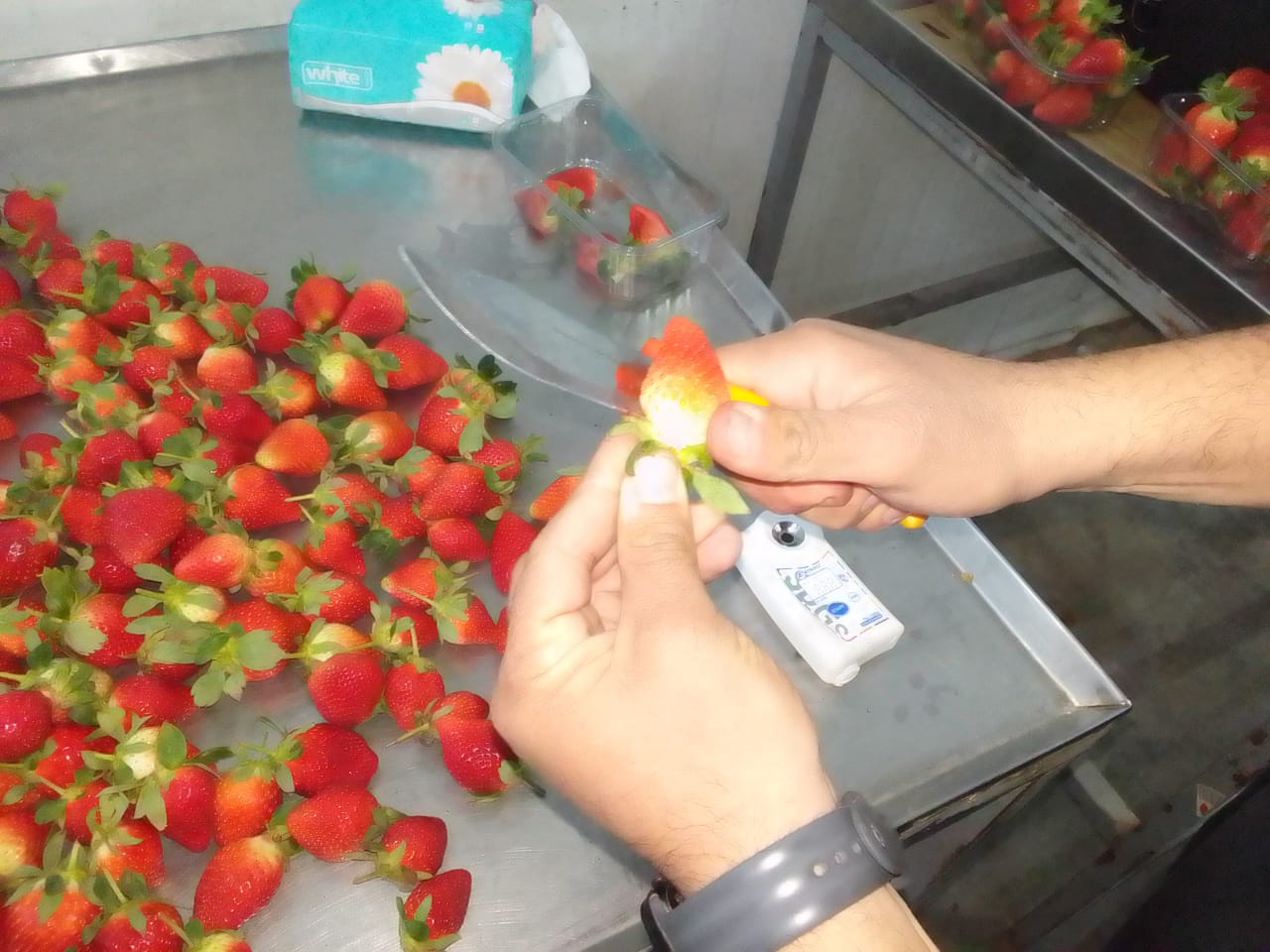
Goodada’s Egypt Fruit Quality Control Inspections play a crucial role in boosting the export readiness of Egyptian fruit and fresh produce. By offering independent, on-the-ground inspections, we help exporters and buyers identify quality issues before the goods leave Egypt. Our inspectors check everything from size, color, and ripeness to packaging, labeling, and container conditions. This ensures the produce meets the specific standards of target markets—whether it’s the EU, the Middle East, or Asia.
We also verify compliance with international requirements, such as proper carton markings, count accuracy, and visual appearance, helping avoid costly rejections at destination ports. Our fast reporting, with photos and detailed findings, gives exporters the chance to fix problems early, while giving buyers peace of mind that their shipments are in order.
What specific aspects are evaluated during a fruit and fresh produce inspection in Egypt?
During a fruit and fresh produce inspection in Egypt, QC Inspectors evaluate several specific aspects to ensure the shipment meets buyer expectations and international market requirements. These include:
- Product Appearance – Color, size, shape, and uniformity of the fruit or vegetables.
- Freshness and Maturity – Ripeness stage, firmness, sugar levels (for some fruits), and signs of over-ripeness or premature harvesting.
- Defects and Damage – Checking for bruises, decay, mold, insect damage, pitting, or sunburn.
- Packaging and Labeling – Carton quality, correct counts per box, proper stacking, palletizing, and compliance with labeling requirements (origin, variety, grade, etc.).
- Temperature and Cold Chain Conditions – Verifying storage or container temperature and whether proper cooling procedures are followed.
- Weight and Count Accuracy – Confirming net weights and quantities match order specifications.
- General Hygiene and Handling Practices – Observing the handling process and cleanliness of the packing area.
How do fruit inspections assist in complying with Egypt’s export regulations?
QC inspections help exporters comply with Egypt’s export regulations by ensuring that fresh produce meets the quality, safety, and documentation standards required by both Egyptian authorities and the destination country. Here’s how:
- Product Grading and Classification – Inspections verify that produce is sorted, sized, and labeled correctly. As required by Egypt’s agricultural export regulations.
- Pesticide Residue Control – While Goodada does not test residues in a lab, visual checks help flag non-compliant produce, especially when exporters must match specific export market requirements.
- Packaging and Traceability – QC inspections ensure that all cartons are labeled correctly with batch numbers, farm IDs, and country of origin, which are critical for traceability and customs clearance.
- Inspection Documentation – Our reports can support the exporter’s official pre-export approval process and help streamline clearance with Egypt’s Central Administration for Plant Quarantine (CAPQ).
- Minimizing Export Issues – By identifying concerns early, inspections help prevent costly delays or non-compliance with Egyptian trade and export requirements.
What are the benefits of utilizing Goodada’s QC services for buyers of Egyptian fruit and fresh produce?
Buyers of Egyptian fruit and fresh produce gain several key benefits by using Goodada’s QC inspection services:
- Reduced Risk of Receiving Poor Quality Shipments – Our inspectors catch issues such as spoilage, mislabeling, incorrect sizing, or damaged packaging before the goods are shipped.
- Confidence in Supplier Performance – Regular inspections provide independent verification of a supplier’s consistency and reliability. Helping buyers identify strong partners and avoid underperformers.
- Improved Compliance with Import Regulations – Goodada ensures products are packed, labeled, and presented in line with destination country standards. Reducing the risk of customs delays or rejections.
- Visual Proof and Fast Reporting – Buyers receive detailed, photo-based reports, giving them full visibility and peace of mind. Without needing to travel or be on-site.
- Cost Savings from Fewer Disputes – Early detection of problems helps prevent costly product returns, claims, or damaged customer relationships.
- Stronger Supply Chain Control – Goodada acts as the buyer’s eyes and ears on the ground in Egypt. Helping maintain quality and consistency across all shipments.
How does Goodada’s global presence support international fruit and fresh produce buyers?
Goodada’s global presence offers international fruit and fresh produce buyers a powerful advantage by providing consistent, on-the-ground quality control across key sourcing regions. Here’s how:
- Inspection Coverage in Over 76 Countries – Buyers can rely on Goodada to inspect goods not just in Egypt. But also in other major export countries like Spain, South Africa, Chile, Türkiye, and India. Ensuring uniform standards across their supply chain.
- Local Inspectors, Global Standards – Our trained local inspectors understand regional farming practices. And work to international benchmarks, helping ensure consistency, fairness, and accuracy in reporting.
- Faster Response Times – With teams already positioned in multiple countries. Our inspections can be arranged quickly, reducing delays in tight shipping schedules.
- Centralised Reporting & Support – Buyers receive standardised, photo-rich reports regardless of the country we conduct the inspection in. Which makes it easier to compare fruit suppliers and make informed purchasing and shipping decisions.
- Risk Management Across Markets – Goodada’s reach allows buyers to diversify sourcing. While maintaining quality control, reducing dependency on a single region, and enhancing supply chain resilience.
Egypt Fruit Quality Control for Buyers – Conclusion
Whether you’re buying lemons for a juice brand or strawberries for a major retailer. Sourcing from Egypt brings big opportunities—but only if the quality is right.
That’s where Goodada’s Egypt Fruit Quality Control Inspections come in. Our experienced inspectors verify what’s being packed, flag potential issues. To give you peace of mind that your produce meets expectations before it ships. Please visit our Egypt Fruit QC Inspections page for more information.
About the Author
Aidan Conaty MBC ACMA GCMA is an international business & trade consultant and the founder of TCI China and Goodada Inspections. Aidan has spent over 20 years assisting companies in trading internationally.
Contact Person: Aidan Conaty
Mobile- Messenger (Click to Connect)

Laptop / PC (Click to Connect)

Phone:(Europe/ Rest of the World) +353 1 885 3919 ; (UK) +44.020.3287.2990 ; (North America) +1.518.290.6604