
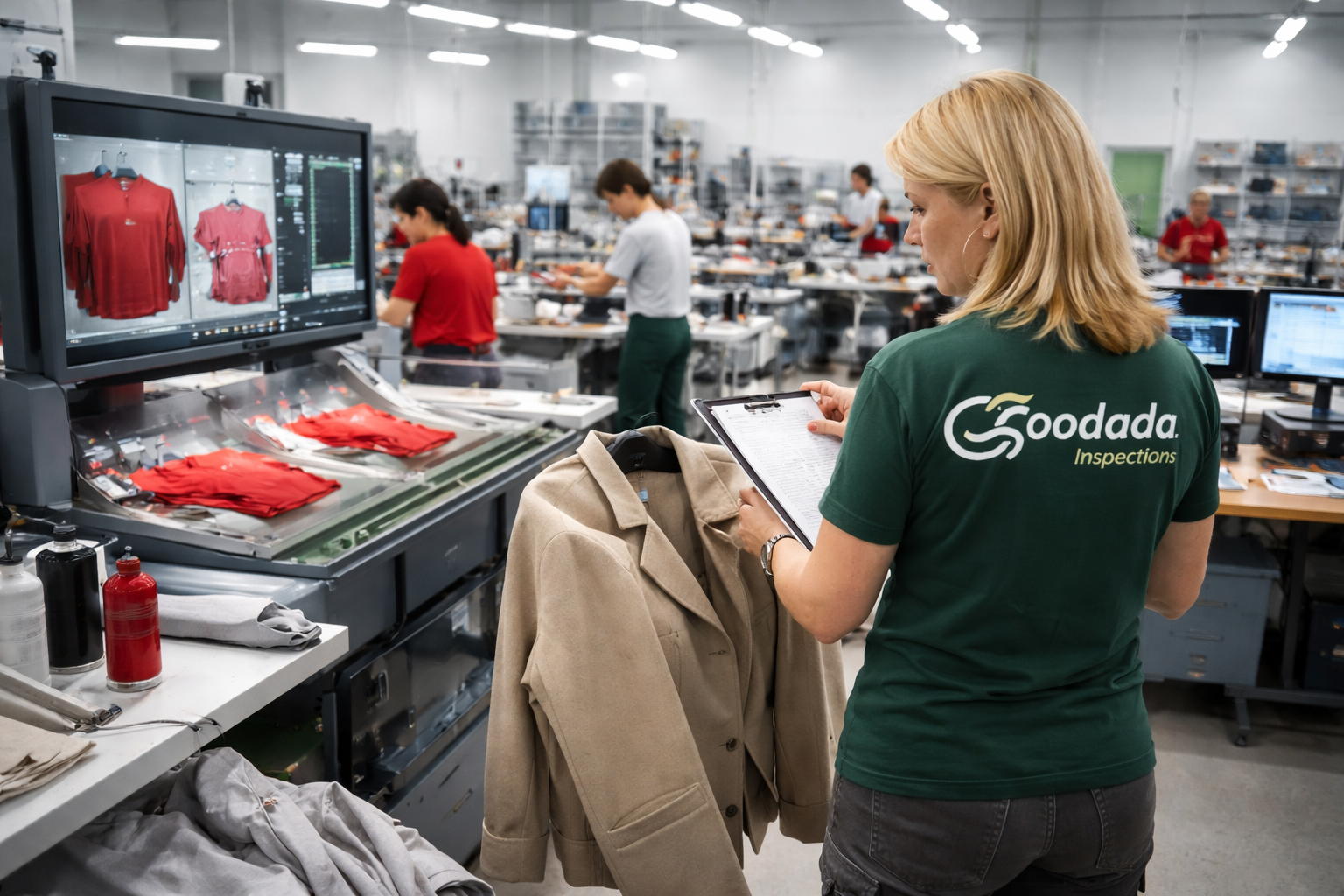
AI in Quality Control – Artificial intelligence and machine vision are no longer futuristic ideas in quality control. Across manufacturing hubs, suppliers are installing automated camera systems, defect-recognition software, and analytics tools designed to catch issues before goods leave the production line.
For buyers and retailers, that raises an obvious question: if AI can scan thousands of units per hour with consistent accuracy, what role does human inspection still play?
The answer isn’t about resisting technology. It’s about understanding where technology excels — and where it does not. Quality control is no longer a choice between AI and human inspectors. It’s about knowing what each does best.
Where AI and Machine Vision Add Real Value
Machine vision systems are extremely effective in controlled production environments. They can detect repetitive surface defects, measure dimensions with high precision, identify colour variation within programmed tolerance, and operate continuously without fatigue.
In sectors such as electronics, automotive components, packaging, and high-volume consumer goods, these systems reduce internal defect rates and improve production consistency. AI also helps factories analyse trends over time, alerting managers before issues escalate.
From a production efficiency perspective, this is a meaningful step forward. There is no doubt that AI is improving internal factory quality systems.
But Production Control Is Not the Same as Supply Chain Control
The limitation of AI becomes clear once goods leave the controlled environment of the production line. Global trade introduces variables that cannot be reliably predicted by factory-based algorithms:
- Damage during loading and unloading
- Moisture exposure during transit
- Temperature fluctuations
- Handling errors at ports and warehouses
- Pallet compression and carton deformation
- Labelling mistakes, mixed cartons, incorrect quantities
Machine vision systems do not travel with shipments. They do not stand in warehouses. They do not assess product condition at destination. Once products move beyond the factory, context changes — and context matters.
AI Detects Defects. Humans Interpret Risk.
One of the most overlooked differences between technology and inspection is judgement. AI identifies what it is programmed to identify. Human inspectors interpret what that means commercially.
Consider a cosmetic defect on furniture or a minor colour shade variance in garments. A machine may flag it as outside tolerance. An experienced inspector can assess whether the issue is acceptable for the intended market, whether it is batch-specific, whether it indicates a wider process problem, or whether it’s likely linked to packing and handling.
Quality is rarely binary in international trade. Retailers don’t simply ask, “Is there a defect?” They ask, “Does this affect saleability, safety, or brand perception?”
That requires judgement — particularly in categories like furniture where finish consistency, damage risk, and packaging suitability matter, which is why importers often use independent
furniture inspections.
Local Presence Cannot Be Replaced by Software
AI operates inside systems. Inspectors operate inside environments. Local inspectors understand regional manufacturing practices, supplier behaviours, and practical logistics risks that don’t appear on dashboards.
An inspection is not just a checklist. It often involves real-time interaction with factory management, warehouse supervisors, or loading teams. When problems arise, a human inspector can request corrective action immediately, verify rework, supervise repacking, and document evidence in a way that stands up in commercial discussions.
Technology does not negotiate, Technology does not push back, Technology does not hold suppliers accountable. Human presence does.
Independence Still Matters
Many factories now promote internal AI inspection capability. While that can improve consistency, it is not independent. An AI system installed by a supplier still operates within the supplier’s structure.
Independent inspections provide neutral documentation and objective reporting aligned to buyer requirements. For importers and retailers, independence is often as important as detection — particularly when quality disputes or chargebacks arise.
AI Cannot Assess the Full Supply Chain
Modern quality control extends beyond surface checks. It includes quantity verification, carton markings, compliance documentation, packaging suitability for export, and container loading practices.
- Quantity and assortment verification
- Packaging integrity and suitability for export
- Pallet condition, stacking, and stability
- Loading methods, weight distribution, bracing, sealing
- Arrival condition checks at destination
These are situational assessments. Many failures occur during logistics, not production. This is especially true in fresh produce, where inbound checks at destination warehouses often prevent avoidable retailer rejections — see our
fruit quality control inspections service.
The Hybrid Model Is the Future
The future of QC is not AI versus inspection. It is integration. Factories will continue adopting automated defect detection and production analytics. Buyers will continue requiring independent checks at key supply chain stages: during production, pre-shipment, loading, and inbound arrival.
AI improves internal manufacturing precision. Independent inspection protects external commercial risk. They serve complementary roles.
Where Human Inspectors Still Excel
There are areas where human inspectors consistently outperform technology in the real world:
- Commercial judgement: assessing whether an issue is acceptable for a specific buyer and market.
- Contextual analysis: distinguishing isolated defects from systemic production problems.
- Real-time problem solving: verifying corrective action immediately, not after shipment.
- Supply chain oversight: packaging, loading, documentation, and arrival condition checks.
- Accountability: independent reporting that supports claims, negotiations, and supplier performance management.
In garments, for example, defect decisions are rarely just visual — they often come down to agreed tolerances, workmanship standards, and AQL interpretation, which is why brands use specialist
garment inspections.
A Practical Perspective
AI is advancing quickly and should be embraced where it improves consistency and efficiency. But quality control is ultimately about trust. Buyers need confidence that products meet agreed specifications, shipments match purchase orders, and risk is verified independently beyond the factory floor.
At Goodada Inspections, we work alongside technological advances rather than against them. Many of the factories we visit already use internal automation. Our role is to verify independently, interpret risk commercially, and provide visibility where problems typically emerge: packaging, loading, handover, and arrival.
If you want a QC approach that combines modern production realities with independent, on-the-ground verification, you can reach us here:
Contact Person: Aidan Conaty (Goodada Customer Support)
Mobile- Messenger (Click to Connect)

Laptop / PC (Click to Connect)

Phone:(Europe/ Rest of the World) +353 1 885 3919 ; (UK) +44.020.3287.2990 ; (North America) +1.518.290.6604
AI in quality control – Final Thoughts
AI and machine vision are transforming QC inside manufacturing environments. They reduce repetitive defects and increase production consistency. But they do not replace independence, context, or local accountability across a global supply chain.
For importers and retailers, the strongest strategy is not choosing between AI and inspection. It is combining both — using automation where it works best, and human oversight where commercial risk is highest.
FAQs
- Will AI replace third-party inspections?
- No. AI enhances internal factory quality control, but it does not replace independent verification at shipment and arrival stages where context, accountability, and commercial risk matter.
- Do factories already use machine vision systems?
- Yes. Many manufacturers use machine vision and automated defect detection to reduce internal error rates and improve production consistency.
- Why do buyers still require independent inspections?
- Independent inspections provide neutral documentation, contextual judgement, and oversight beyond the production line, including packaging, quantity checks, loading practices, and arrival condition.