
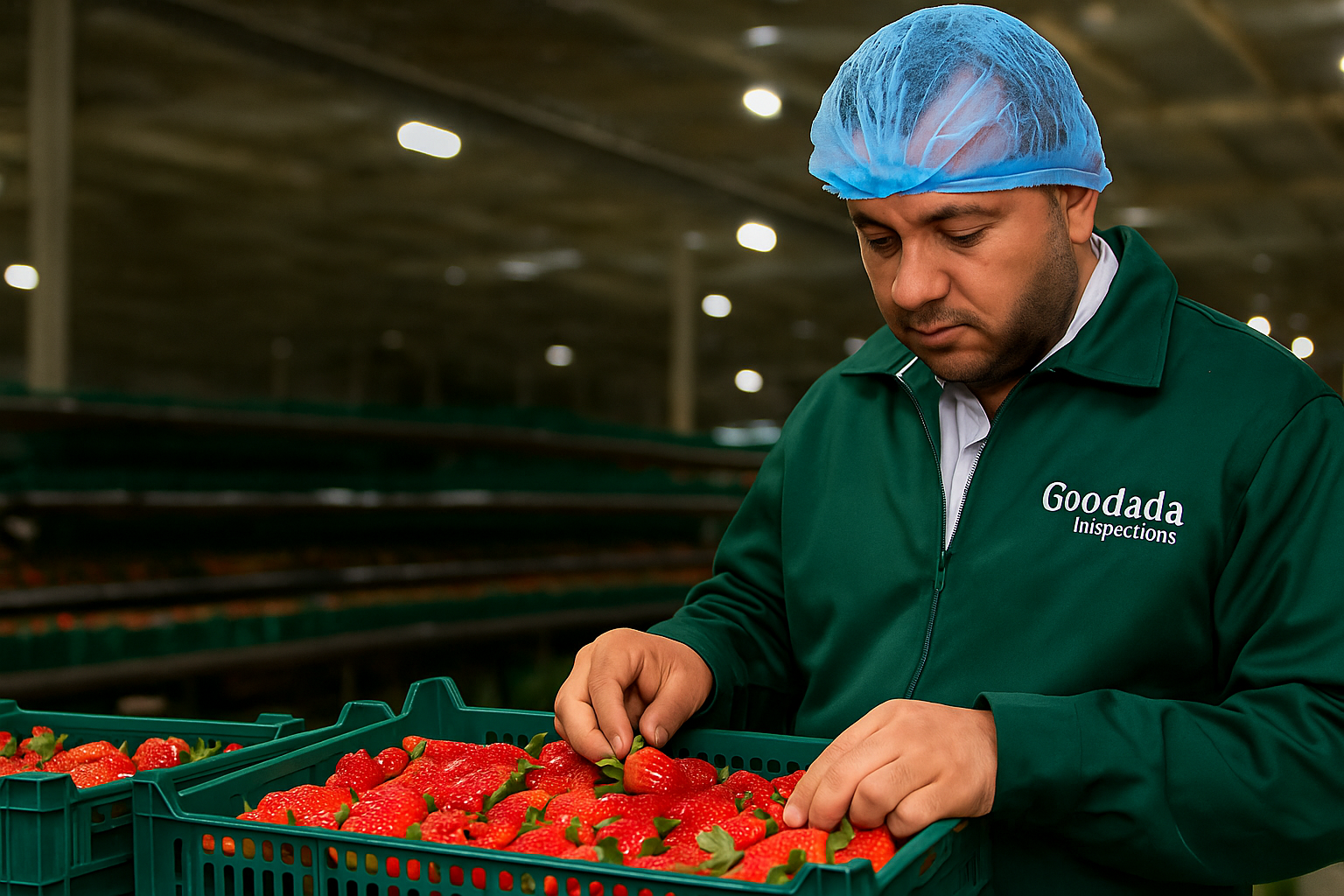
What Inspections Are Done on Berries? By Aidan Conaty — Goodada Inspections
When sourcing, packing, or exporting berries — whether strawberries, blueberries, raspberries, or blackberries — inspections and quality-control checks are essential. At Goodada Inspections, we see too many fruit shipments rejected because one small quality step was overlooked.
This article explains what inspections are carried out on berries, why they matter, and how you can protect your supply chain using Goodada’s global inspection services. If you require berry QC Inspection, please don’t hesitate to contact me. My details are below:
Contact Person: Aidan Conaty (Goodada Customer Support)
Mobile- Messenger (Click to Connect)

Laptop / PC (Click to Connect)

Phone:(Europe/ Rest of the World) +353 1 885 3919 ; (UK) +44.020.3287.2990 ; (North America) +1.518.290.6604
Why Berry Inspections Matter
Berries are high-value, highly perishable produce. They have a short shelf life and are extremely sensitive to temperature and handling. A few hours of delay or a lapse in cold-chain control can result in product loss or rejection.
As outlined on our Fruit Inspections and Quality Control page, proper inspections ensure that fruit meets the agreed-upon standards for quality, packaging, hygiene, and transportation before and after shipment.
International guidelines such as the UNECE Standard FFV-57 for Small Fruits and Berries and recommendations from the FAO highlight the need for systematic checks to preserve fruit quality, freshness, and safety during trade.
Main Inspection Stages for Berries
Goodada Inspections conducts fruit inspections in over 76 countries worldwide. Our standard berry inspection programme typically includes the following stages:
1. Pre-Harvest / Harvest Inspection
- Verify berries are picked at the correct maturity, with consistent colour, size, and shape.
- Check for unripe or overripe fruit and remove defects early.
- Confirm hygiene and careful handling during harvest; tools and bins must be clean.
- Review packing area readiness (temperature, humidity, cleanliness).
Identifying issues at this early stage prevents future defects and loss.
2. Packing / Pre-Shipment Inspection
- Assess bruising, mould, contamination, and uniform size/colour.
- Review packaging materials (punnets, clamshells, cartons) for hygiene and suitability.
- Verify weight accuracy, labelling, and cooling procedures.
- Conduct random sampling for visual and physical checks.
Our full inspection checklist is outlined on our Fruit Inspections and Quality Control page.
3. Loading Inspection
- Verify the cleanliness and temperature of trucks or refrigerated containers.
- Confirm packaging integrity and pallet layout to prevent compression damage.
- Record loading temperature and humidity; verify seal numbers and documentation.
This stage helps ensure that the cold chain begins under controlled conditions.
4. In-Transit / Storage Monitoring
- Track temperature and humidity consistency via data loggers or checks.
- Confirm vehicle cleanliness and seal integrity; record delays or incidents.
Data from this phase confirms cold-chain compliance and supports any claims if damage occurs.
5. Arrival / Discharge Inspection
- Inspect for spoilage, leakage, temperature abuse, and packaging collapse on arrival.
- Verify quantity received versus shipped and capture photographic evidence.
See our regional overview in Fruit Quality Control Inspections in Europe for discharge best practices (applicable globally).
6. Supplier / Facility Audit
- Review worker practices, handling processes, and sanitation.
- Check temperature control, traceability systems, and certifications.
- Assess internal QC documentation and corrective-action processes.
Why audits matter is covered in our overview blog: Fruit Inspection.
Why Berries Require Special Attention
- Short shelf life — rapid deterioration if not kept at correct temperatures.
- Delicate structure — easily bruised or mould-damaged.
- Strict retailer standards — supermarkets and importers demand full QC documentation.
- Complex packaging — small punnets and ventilated containers need tight hygiene control.
- Global supply chains — with berries moving between continents, inspection consistency is vital.
Goodada’s Global Berry Inspection Services
Goodada Inspections provides:
- On-site fruit inspections at packhouses, ports, and warehouses
- Trained inspectors familiar with international grading standards
- Photo-rich reports issued within 24 hours
- Consistent pricing and service across 76+ countries
- Tailored checklists for berries and other soft fruits
Ready to book? Visit Fruit Inspections and Quality Control and request a quote. Our team can usually schedule an inspector within 24 hours.
FAQs About Berry Inspections
1. What types of inspections are done on berries?
Berries are checked during harvest, packing, loading, and delivery. Each stage includes visual, temperature, and packaging checks to ensure compliance with international standards.
2. Why are berry inspections important?
Because berries are fragile and perishable, small handling errors can lead to spoilage or rejection. Regular inspections protect quality and maintain buyer confidence.
3. Who conducts berry inspections?
Independent third-party firms, such as Goodada Inspections, provide trained inspectors across 76+ countries.
4. What do inspectors look for?
Inspectors review berry size, colour, firmness, contamination, insect damage, weather impact, packaging integrity, temperature, and labelling.
5. When should berry inspections take place?
At harvest, before shipment (pre-shipment), and upon arrival (discharge). Some exporters also request in-transit temperature monitoring.
6. How long does a berry inspection take?
Most on-site inspections last one working day, depending on shipment size.
7. What countries does Goodada cover for berry inspections?
Goodada Inspections operates in over 76 countries across Asia, Europe, Africa, and the Americas.
8. How much does a berry inspection cost?
The average daily inspection rate varies depending on location and scope. European and North American inspections can be more costly when compared to Africa and Asia.
9. Are inspections based on any official standards?
Yes, inspections can reference UNECE Standard FFV-57 and FAO guidelines for fruit grading and handling.
10. How can I book a berry inspection?
Visit inspection.goodada.com and request a quote.